
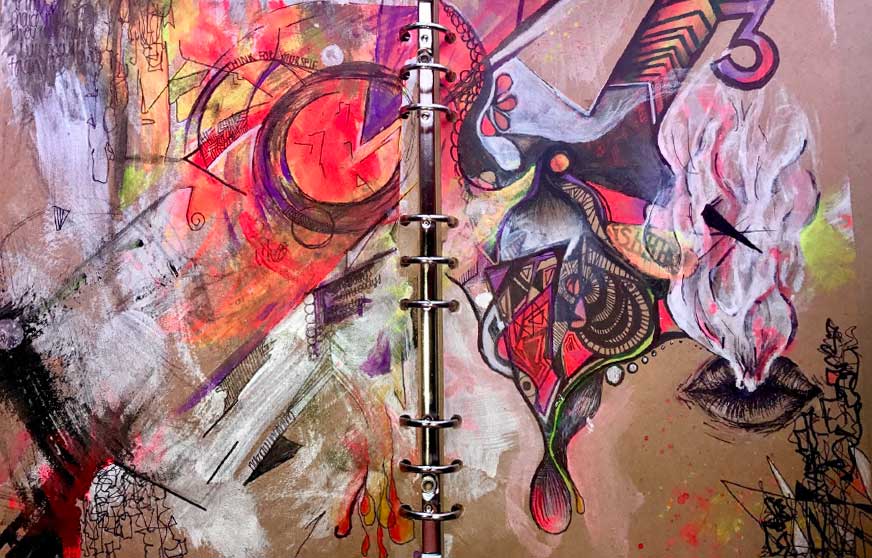
 Defining the precise feeling that precipitated a work of art can be difficult. Perhaps the artist is motivated by a combination of feelings that as yet lacks form or mental representation. For example, some projects arise out of free-floating anxiety, others from the wonder of nature, and others from a sudden or inexplicable feeling of otherworldliness. Robin Collingwood, a twentieth century philosopher, believed that these unformed thoughts and feelings are burdensome and that art helps people work through them to arrive at a more articulated model of their feelings. The outcome is a discrete and living phenomenon of expression that reflects the working intellect of that artist alone.
“Thinking with the hands” is one method by which an artist achieves the discrete expression of an internal state. The bodily motion of the hands on the clay, or the editing computer, or across the keys on the piano precipitates intellectual motion as well. The method unifies mind and body, marries content with form, and manifests as a unique and personal work of art.
[Image by Sarah Krolik – Media Aesthetics and Creativity – Fall 2017]
You must be logged in to post a comment.
llilli
July 22, 2018
Art, Creativity and Mindfulness
No Comment